Navigating Japan’s New Era of 4 Million Foreign Residents
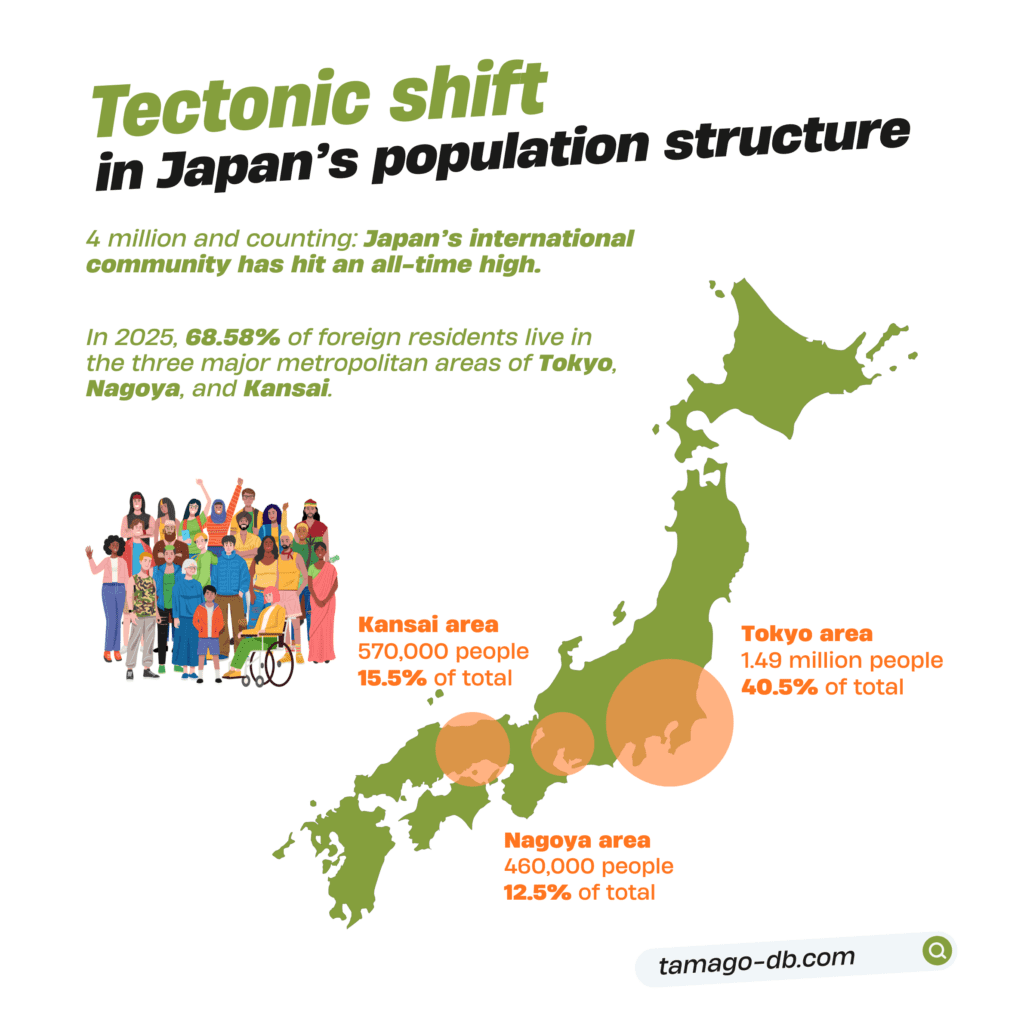
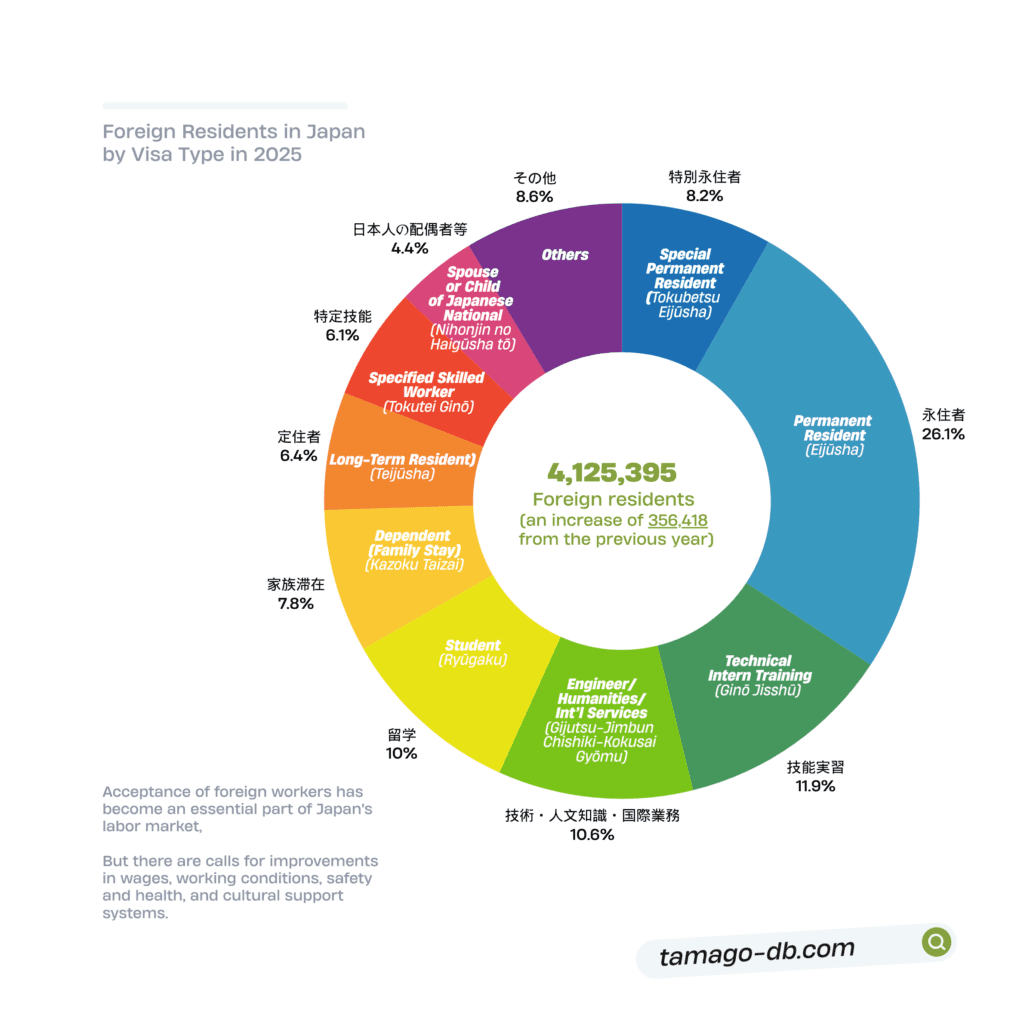
As Japan pauses for Golden Week, the silence in the office districts masks a loud reality: the Japanese workforce has fundamentally changed. We have reached a historic turning point where the number of foreign residents has surpassed 4.1 million—a record high that comes at a time when the native population saw a staggering decline of 900,000 in a single year.
With nearly 70% of this talent concentrated in Tokyo, Nagoya, and Kansai, “globalization” is no longer a corporate buzzword, but a reality of 2026.
The IT Sector: Leading by Necessity
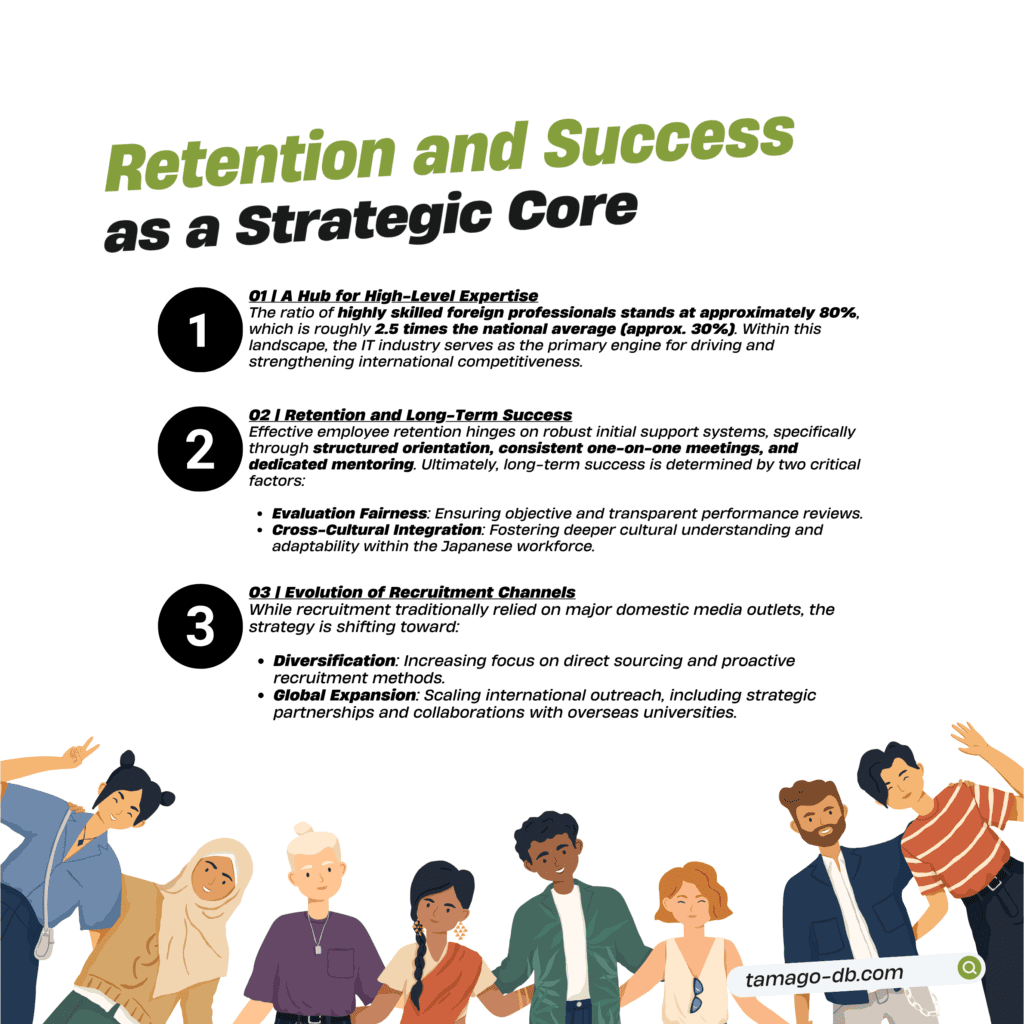
The technology industry is the “canary in the coal mine” for this transition. Facing a projected shortage of 790,000 IT professionals by 2030, tech firms are no longer hiring international talent as a temporary fix. According to recent data from Bizmates Co., Ltd., the tech sector is hiring highly skilled foreign professionals at 2.5x the national average.
A significant hurdle emerged in April 2026: the government’s overhaul of immigration fees. With five-year visa renewals now costing up to ¥70,000, the financial “buy-in” for a career in Japan has increased significantly.
For the modern international professional, a long-term visa is now a significant financial asset. For employers, this means the “investment” in a candidate must be matched by a workplace culture that justifies that cost.
Bridging the Retention Gap
While talent is arriving in record numbers, the “Retention Gap” remains the industry’s Achilles’ heel. Data shows a disconnect between visa eligibility and actual long-term settlement (5+ years). To turn “arrivals” into “anchors,” the industry is coalescing around three pillars:
Pillar
Focus Area
Objective
1. Structural Support
Onboarding & Mentoring
Moving beyond “sink or swim” to 1-on-1 guidance.
2. Mutual Fluency
Cultural Literacy
Bridging gaps on both sides, not just demanding assimilation.
3. Merit-Based Equity
Fair Evaluation
Ensuring performance is judged on output, not cultural nuance.
The Bottom Line
As the gap between the domestic labor supply and industry demand widens, the organizations that win will be those that stop viewing international talent as “foreign help” and start seeing them as the strategic core of their business.
The shift in fees and the record-breaking residency numbers prove that Japan is open for business, but the challenge for 2026 is evolving the office culture to ensure that once talent arrives, they choose to stay.
How is your organization adapting its evaluation systems to ensure your international talent has a clear path to leadership?